



The Ultimate Guide to Cleaning Nonstick Cookware

Nonstick cookware is a firm favorite of home chefs for a reason: Its slippery surface ensures food releases as easily as possible—resulting in perfectly cooked meals and easy cleanup. But while nonstick cookware was designed to make cleanup a breeze, these pots, pans, and bakeware still require a bit of TLC to ensure they last for years to come. In this article, we’ll break down everything you need to know to clean and care for your nonstick cookware.
How to Clean Nonstick Cookware: The Basics
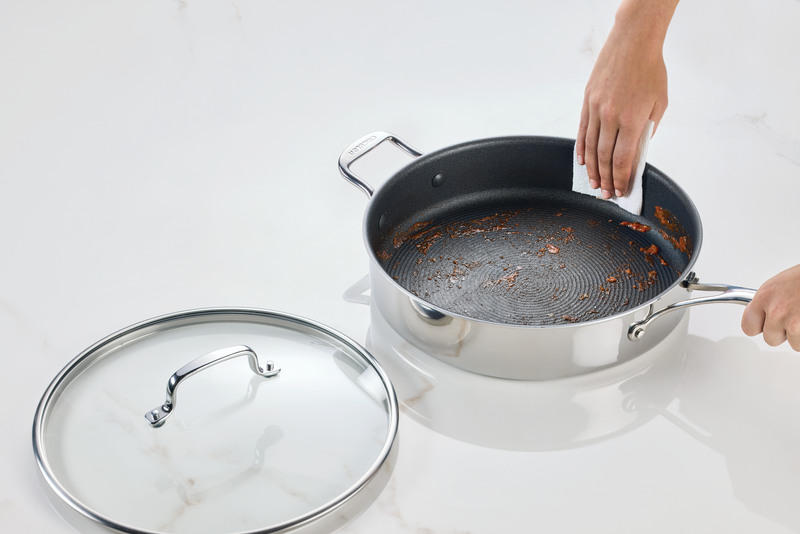
Handwashing your nonstick cookware is the best way to ensure the longest-lasting performance of the nonstick surface. The experts here at Circulon recommend using mild dishwashing detergent, warm water, and a soft nylon brush or sponge to remove food and grease particles from the surface of your cookware. Once you’ve cleaned all of the debris and oil from your pan, be sure to rinse it thoroughly with clean water and use a soft towel to wipe it dry before putting it away.
The longer a pan sits out, the more food will cling to its surface. So for the easiest cleanup, we also recommend hand washing shortly after use. That said, never expose hot cookware to cold water, as it can warp your cookware and put you in danger of being burned while doing the dishes.
Pro Tips for Cleaning Your Nonstick Pans:
-
Clean pans as soon as they cool down, as food, oil, and grease will be easiest to remove shortly after use
-
Rinse cookware in warm, soapy water before going in with a sponge to help gently loosen any stuck-on debris.
-
Never use steel wool, harsh scrub brushes, or abrasive cleaners when washing nonstick cookware, as they can damage the cooking surface.

How to Clean Grease off of Nonstick Pans
If you’ve fried up some bacon or start to notice a build-up of grease and oil on the cooking surface of your pans, the same process we outlined above will help get them clean. Wait until your pan has cooled down, drain off any excess grease to avoid clogging your plumbing, and then use mild detergent, warm water, and a soft nylon scrub pad to clean the cooking surface.
If you’re struggling to remove all traces of grease from your nonstick cookware, try placing the pan back on the stove over medium-low heat to liquefy the grease. Then, carefully use a paper towel to sop up any stubborn grease before repeating your usual cleaning process. You can also try bringing a mixture of two parts water and one part white vinegar to a gentle simmer in the pan on the stove, which will help break down any particularly stubborn areas of grease or debris.
How to Remove Burnt-On Food and Oil from Nonstick Pans
Even the most experienced home chefs know that sometimes, food gets burned while cooking. Cleaning burnt-on oil or food from nonstick pans can take a little bit of time, but is still a breeze when compared to cleaning stainless steel or cast iron.
To clean burnt-on food, start by following your usual cleaning process. Attempt to remove burnt food and debris from the surface of the pan using warm water, mild detergent, and a soft nylon scrub pad or brush.
Don’t worry if food remains on the nonstick surface—a bit of vinegar should help get your pan back into shape. Here’s how our experts suggest using vinegar to clean nonstick cookware:
-
If you’ve already tried washing your pan, dry the bottom using a soft towel and return it to the stove.
-
Boil a mixture of two parts water and one part vinegar in your pan on medium heat for 5-10 minutes. You should be able to see food particles dislodge in real time while the mixture is simmering. You can help the process along by using a wooden spoon to dislodge any of the stuck food while it’s simmering
-
Let the mixture stand until cooled, then wash your pan in warm soapy water with a soft nylon brush to remove any remaining food particles, debris, and vinegar.
Dealing with stubborn burns? Check out our full guide on how to clean a burnt pan for more expert tips and tricks!
Can You Put Nonstick Pans in the Dishwasher?
We always recommend hand-washing nonstick pans, even if they are labeled as dishwasher safe. That’s because extremely hot water and harsh detergents can cause cookware coatings like nonstick to deteriorate faster than they would if washed by hand.
That said, Circulon has developed nonstick pans designed to withstand daily wear and tear—regular cycles in the dishwasher included. Our collection of dishwasher-safe nonstick cookware features Circulon’s signature extra-durable nonstick coating, which can handle dishwashers better than cheaper nonstick options. These pots and pans also feature fully encapsulated edge-to-edge stainless steel bases that prevent rust and corrosion caused when aluminum is exposed to the high temperatures of the dishwasher. Those bases also help ensure pans heat evenly, meaning that you won’t have to worry about cleaning stuck-on food that can be caused by hotspots.

Tips for Extending the Life of Your Nonstick Cookware
In addition to following the cleaning tips we’ve outlined in this article, there are a few best practices to keep in mind when it comes to using your nonstick cookware. These can help avoid damaging the nonstick surface of your cookware, ensuring the surface stays slippery (and easy to clean!) for years to come.
Watch the Heat
Nonstick cookware is designed to be used with low to medium heat—even premium nonstick cookware like Circulon’s pots and pans will begin to deteriorate and lose performance when exposed to temperatures above 400° F. Circulon pans are made to heat up quickly and to hold the heat so you only need a medium heat setting. If you need a higher heat setting, like for stir fry cooking, you can heat the pan on high for about two minutes to get the pan nice and hot and then turn the heat down to medium. By turning the heat down to medium, you are maintaining the higher heat without overheating your pan.
Watching the heat while you cook will not only help extend the lifetime of your pan’s nonstick surface, but it will also help avoid burnt food becoming stuck to the pan, which can make it harder to clean.
Use High-Smoke-Point Oils when Cooking
Though nonstick pans are designed to be used at lower temperatures, their surfaces still get hot enough to create gorgeous sears. This is why we always recommend using an oil or fat source with a high smoke point, such as peanut oil, coconut oil, avocado oil, or butter when cooking with a nonstick pan.
Avoid using low-smoke-point oils or aerosol cooking sprays when cooking with a nonstick pan. These tend to burn at lower temperatures, which can cause them to adhere to your pan in a burnt-on residue that can impede the pan’s nonstick coating.
Avoid Metal Utensils
While some premium nonstick cookware, like Ciculon’s SractchDefense™ A1 Series and C1 Series, have been specifically developed to stand up to metal utensils, it is generally recommended to avoid using metal utensils when cooking with nonstick pans.
Metal utensils tend to have sharp edges, which can scratch the nonstick coating of pots and pans over time, resulting in scratched pans and increasingly sticky cooking surfaces. To extend the lifetime of your cookware, use nonstick-friendly utensils, such as those made of wood, silicone, or nylon.
Oil Pans After Use
Part of the appeal of nonstick cookware is that it doesn’t need to be seasoned in the same way a cast-iron skillet does—and that its nonstick properties don’t rely on using a generous amount of fat in the way that stainless steel pans require. While you can use a little bit of oil or fat while cooking to ensure easy food release, Circulon’s nonstick pans don’t require seasoning or prep before using.
Great Food, Easy Cleanup
First-time cooks and home chefs alike love that nonstick pans are easy to use and even easier to clean. By following these tips, you’ll be able to help preserve the slippery surface of your favorite nonstick cookware, so you can whip up weeknight meals and perfect family recipes for years to come.
For more tips, recipes, and to shop some of the best nonstick cookware on the market, visit circulon.com.
